
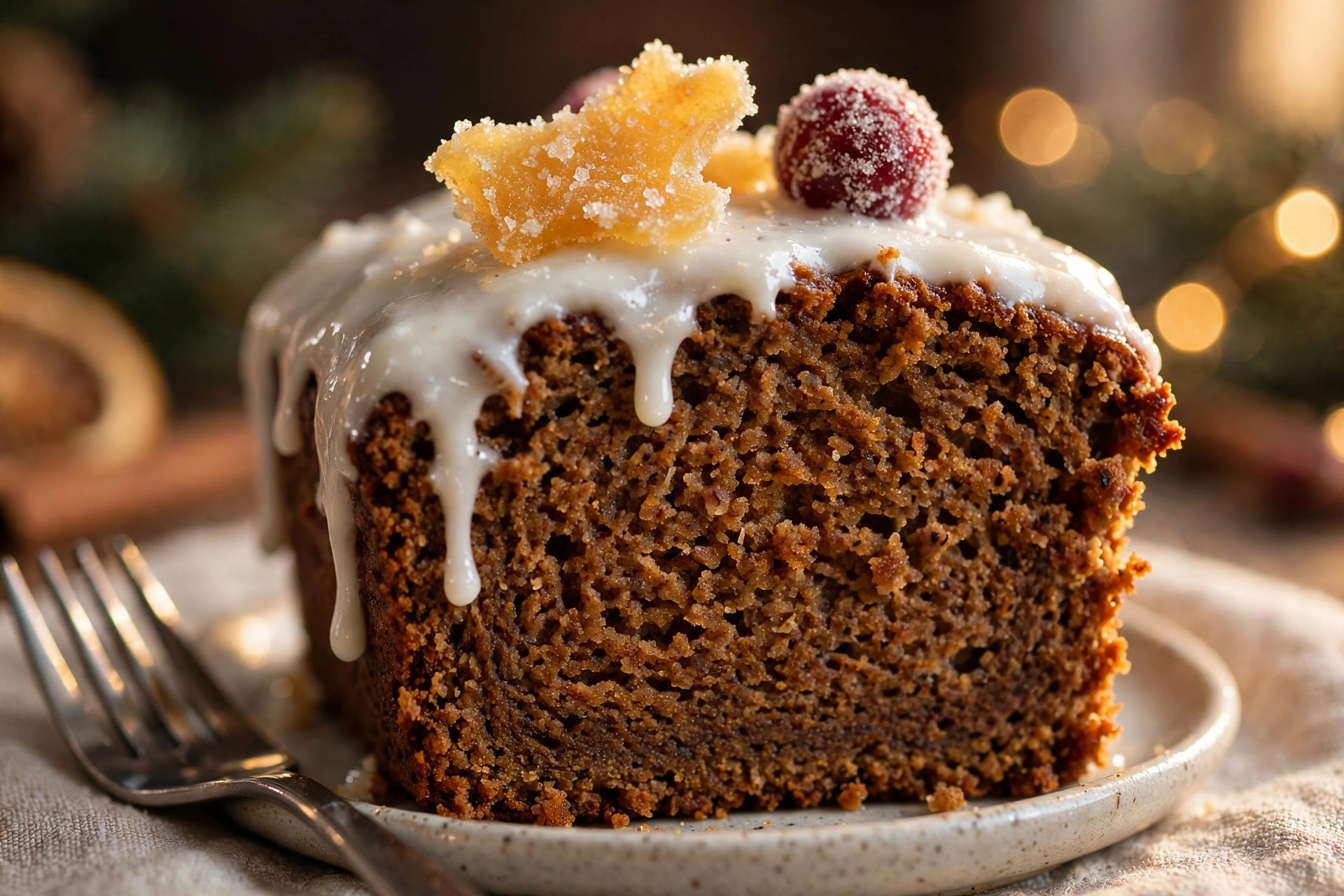
This gingerbread loaf cake is the Christmas bake that smells like the holidays before it even leaves the oven — warm molasses, fresh ginger, cinnamon, and cloves rising up through the whole house while a dark, glossy loaf slowly turns golden in the pan. It is moist and deeply spiced, with a tight, tender crumb that stays soft for days, and it wears a tangy cream cheese glaze that sets into a thin, glossy layer and drips just enough down the sides to look like you spent far longer on it than you did. One bowl, one pan, no decorating skills required — and it slices into the prettiest pieces on the Christmas table, especially with a sprinkle of crystallized ginger and a few sugared cranberries on top. Bake it for brunch, wrap it up as a food gift, or set it out with coffee after Christmas dinner: it is the loaf cake that disappears slice by slice, and the one people ask for the recipe for before they have even finished eating it.
Why This Gingerbread Loaf Cake Recipe Works
- Warming the molasses mixture blends it in seconds. Warming the butter, molasses, and brown sugar together until loose and glossy is what lets the molasses fold into the batter in a few strokes — cold molasses clumps and leaves dark streaks in the crumb.
- Buttermilk keeps the crumb tender for days. The acidity in buttermilk tenderizes the crumb and activates the baking soda, so the loaf rises light and stays moist far longer than a milk-based version.
- Temperature, not color, decides doneness. Molasses makes the top look dark and done long before the center is set; pulling the loaf at 200 to 205°F in the center is the only test that never lies.
- The glaze goes on just warm. Glazing while the loaf is barely warm lets the cream cheese glaze settle into a thin, glossy layer instead of sliding off (too hot) or sitting thick and dull (too cold).
- One pan, zero decorating. No layers, no piping, no frosting a cake — the loaf pan does the shaping and the glaze does the decorating, so it looks like a bakery loaf with almost no effort.
Ingredients for Gingerbread Loaf Cake
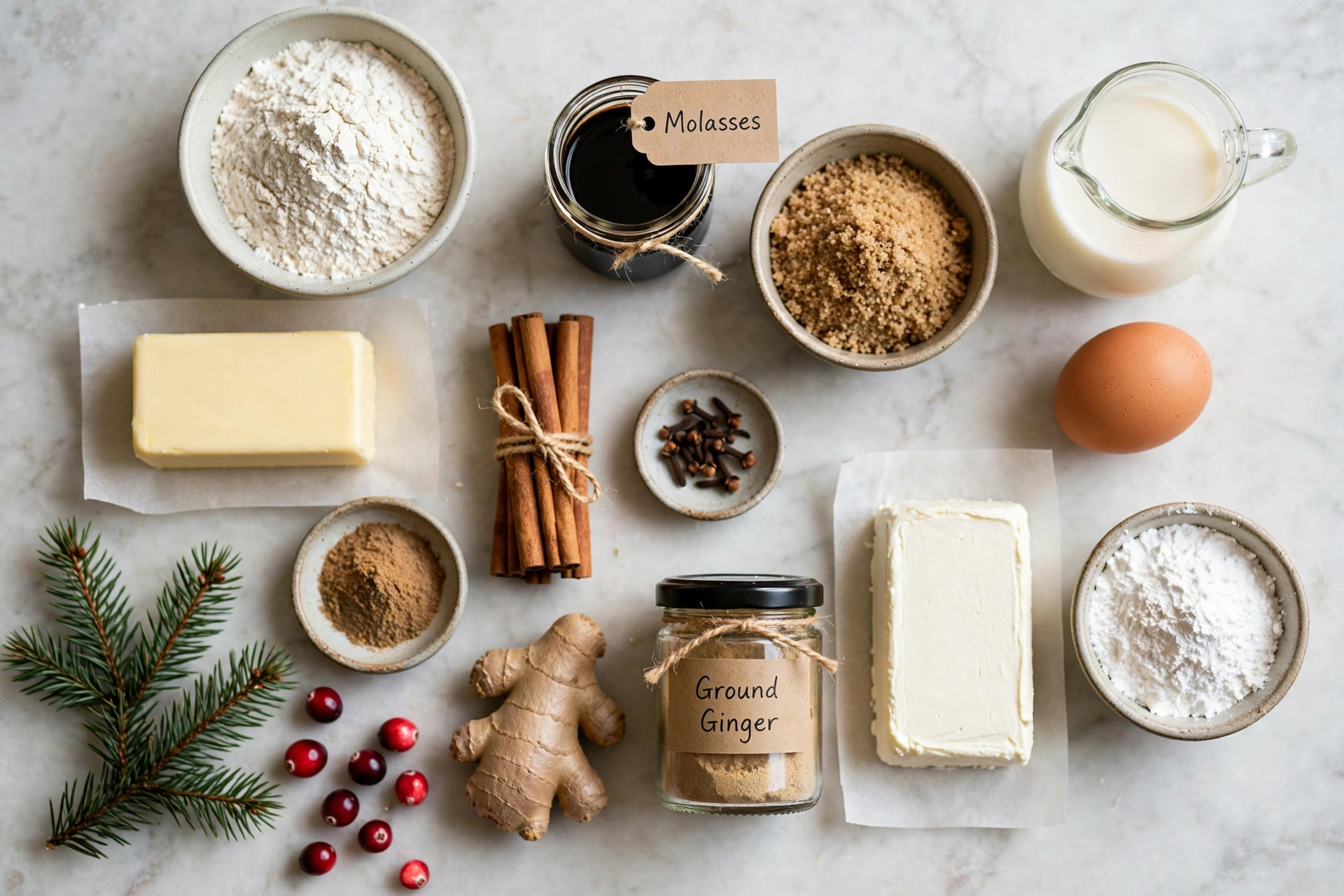
- 1 3/4 cups (220 g) all-purpose flour, spooned and leveled
- 1 teaspoon baking soda
- 1/2 teaspoon fine sea salt
- 2 teaspoons ground ginger
- 1 teaspoon ground cinnamon
- 1/4 teaspoon ground cloves
- 1/4 teaspoon ground nutmeg
- 1/2 cup (115 g) unsalted butter
- 1/2 cup (120 ml) unsulphured molasses (not blackstrap)
- 1/2 cup (100 g) packed light brown sugar
- 1 large egg, at room temperature
- 1/2 cup (120 ml) buttermilk, at room temperature
- 1 teaspoon pure vanilla extract
- 1 tablespoon freshly grated ginger (optional, for extra warmth)
- 4 ounces (115 g) cream cheese, softened
- 1 cup (120 g) powdered sugar
- 2 to 3 tablespoons whole milk
- 1/2 teaspoon pure vanilla extract
- 2 tablespoons finely chopped crystallized ginger, for topping
- Sugared cranberries, for topping (optional)
How to Make Gingerbread Loaf Cake
- Preheat and prep the pan: Heat the oven to 350°F (175°C). Grease a 9×5-inch metal loaf pan with butter or baking spray and line the bottom with a strip of parchment paper, leaving a little overhang on the two long sides for easy lifting.
- Whisk the dry ingredients: In a medium bowl, whisk together the flour, baking soda, salt, ground ginger, cinnamon, cloves, and nutmeg until evenly combined. Set aside.
- Warm the molasses mixture: In a small saucepan over low heat (or a microwave-safe bowl), warm the butter, molasses, and brown sugar together just until the butter melts and the mixture turns loose and glossy, about 2 minutes. Remove from the heat and let it cool for 5 minutes so it is warm, not hot.
- Whisk the wet ingredients: In a large bowl, whisk the egg, buttermilk, vanilla extract, and freshly grated ginger (if using) until smooth. Slowly whisk in the warm molasses mixture until fully combined.
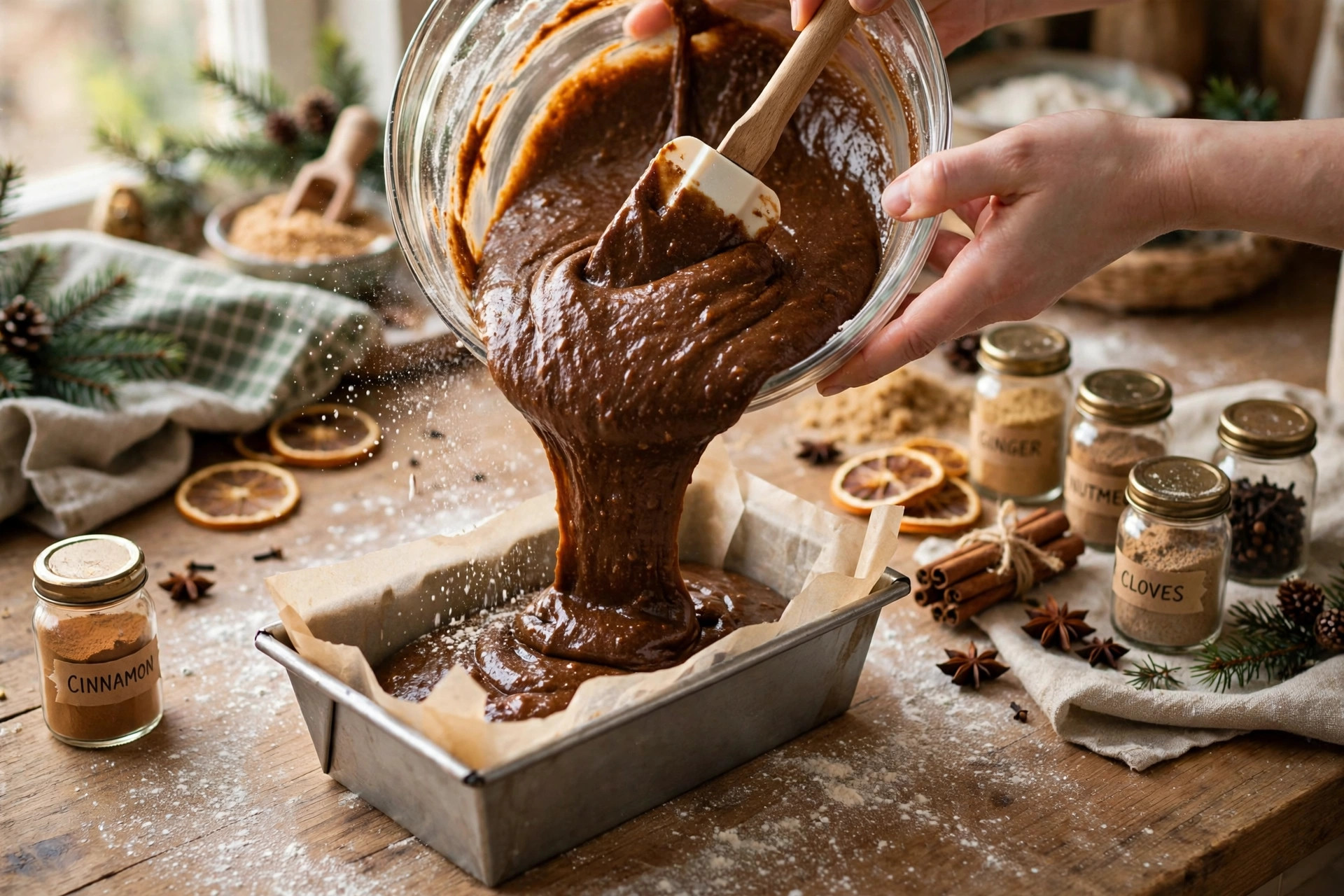
- Combine and pour: Pour the wet ingredients into the dry ingredients and stir with a spatula just until no dry streaks remain — a few small lumps are fine. Do not overmix, or the loaf bakes tough. Pour the batter into the prepared pan and smooth the top.
- Bake: Bake on the middle rack for 55 to 60 minutes, tenting loosely with foil around the 35-minute mark if the top is browning too fast. The loaf is done when a skewer inserted in the center comes out with a few moist crumbs, or an instant-read thermometer reads 200 to 205°F in the center. Cool in the pan on a wire rack for 15 minutes, then lift out and cool completely.
- Make the glaze: While the loaf cools, beat the softened cream cheese, powdered sugar, 2 tablespoons of milk, and vanilla extract together until completely smooth. Add the remaining tablespoon of milk a little at a time until the glaze ribbons off the whisk and pours in a slow, thick stream.
- Glaze and slice: Pour the glaze over the just-warm loaf so it drips down the sides and sets into a thin glossy layer. Sprinkle with chopped crystallized ginger and sugared cranberries, if using. Let the glaze set for 20 minutes, then slice with a serrated knife and serve.
Pro Tips for Perfect Gingerbread Loaf Cake
- Warm the molasses mixture first. Warming the butter, molasses, and brown sugar together until glossy is what blends the molasses in a few strokes — cold molasses clumps and leaves dark streaks in the crumb.
- Pull by temperature, not color. Molasses makes the top look dark and done long before the center is; a skewer with a few moist crumbs or 200 to 205°F in the center is the only reliable doneness test.
- Glaze it just warm. Glaze the loaf while it feels only slightly warm to the touch — hot and the glaze slides right off, fully cool and it sits thick instead of setting into that thin glossy layer.
- Do not use blackstrap molasses. Blackstrap is bitter and overpowering; unsulphured light or dark molasses gives the classic warm gingerbread flavor.
- Tent with foil if the top browns early. The loaf bakes for nearly an hour, and the molasses top darkens fast — a loose foil tent at 35 minutes keeps the top from over-browning while the center finishes.
Variations
- Orange gingerbread loaf: Add 1 tablespoon of finely grated orange zest to the wet ingredients and swap the milk in the glaze for fresh orange juice — bright citrus against the dark molasses is a classic Christmas pairing.
- Gingerbread loaf with chocolate chips: Fold 3/4 cup of dark chocolate chips into the batter before pouring — they melt into gooey pockets against the spiced crumb.
- Cranberry gingerbread loaf: Fold 3/4 cup of fresh or frozen cranberries (tossed in 1 tablespoon of flour) into the batter for tart red bursts in every slice.
- Spiced streusel topping: Before baking, sprinkle the top with a crumble of 1/4 cup flour, 2 tablespoons brown sugar, 1 tablespoon cold butter, and 1/2 teaspoon cinnamon for a crunchy lid.
- Gluten-free gingerbread loaf: Use a 1:1 gluten-free baking flour blend in place of the all-purpose flour — the batter is forgiving, and the loaf stays moist and sliceable.
Storage and Make-Ahead
- Room temperature: Wrap the unglazed loaf tightly in plastic wrap or foil — it keeps moist for up to 4 days on the counter. Glaze the day you serve it for the glossiest finish.
- Fridge: The glazed loaf keeps in an airtight container in the fridge for up to 5 days. Bring slices to room temperature for 20 minutes before serving so the crumb softens.
- Freezer: Wrap the cooled, unglazed loaf in plastic wrap, then foil, and freeze for up to 3 months. Thaw overnight in the fridge, bring to room temperature, then glaze and serve.
- Make-ahead for Christmas: Bake the loaf up to 3 days ahead, wrap it unglazed, and glaze it the morning you serve it — it tastes even better on day two, once the spices have settled into the crumb.
Frequently Asked Questions
Can I make gingerbread loaf cake ahead of time?
Yes — it is one of the best make-ahead Christmas bakes. Bake it up to 3 days ahead, wrap it tightly unglazed, and glaze it the day you serve it. The flavor actually deepens as the spices settle into the crumb.
Why did my gingerbread loaf sink in the middle?
The most common cause is pulling it too early — molasses makes the top look done before the center sets. Use a skewer or a thermometer (200 to 205°F in the center) rather than color. Overmixing the batter can also collapse the crumb, so stir just until the dry streaks disappear.
Can I use fresh ginger instead of ground ginger?
Yes — the recipe already includes a tablespoon of freshly grated ginger alongside the ground spices. Fresh ginger adds a brighter, sharper warmth; keep the ground ginger too, since it gives the deep background spice the loaf needs.
What is the difference between gingerbread loaf cake and gingerbread cake?
They are the same batter, baked in different pans. The loaf pan gives a taller, sliceable cake with a tighter crumb and a longer bake; a square or round cake pan gives a shorter bake and a softer, more pudding-like crumb.
Can I freeze gingerbread loaf cake?
Yes. Wrap the cooled, unglazed loaf in plastic wrap and foil and freeze for up to 3 months. Thaw overnight in the fridge, bring to room temperature, then glaze fresh before serving.
Gingerbread Loaf Cake
Ingredients
- 1 3/4 cups 220 g all-purpose flour, spooned and leveled
- 1 teaspoon baking soda
- 1/2 teaspoon fine sea salt
- 2 teaspoons ground ginger
- 1 teaspoon ground cinnamon
- 1/4 teaspoon ground cloves
- 1/4 teaspoon ground nutmeg
- 1/2 cup 115 g unsalted butter
- 1/2 cup 120 ml unsulphured molasses (not blackstrap)
- 1/2 cup 100 g packed light brown sugar
- 1 large egg at room temperature
- 1/2 cup 120 ml buttermilk, at room temperature
- 1 teaspoon pure vanilla extract
- 1 tablespoon freshly grated ginger optional, for extra warmth
- 4 ounces 115 g cream cheese, softened
- 1 cup 120 g powdered sugar
- 2 to 3 tablespoons whole milk
- 1/2 teaspoon pure vanilla extract
- 2 tablespoons finely chopped crystallized ginger for topping
- Sugared cranberries for topping (optional)
Instructions
- Preheat and prep the pan: Heat the oven to 350°F (175°C). Grease a 9×5-inch metal loaf pan with butter or baking spray and line the bottom with a strip of parchment paper, leaving a little overhang on the two long sides for easy lifting.
- Whisk the dry ingredients: In a medium bowl, whisk together the flour, baking soda, salt, ground ginger, cinnamon, cloves, and nutmeg until evenly combined. Set aside.
- Warm the molasses mixture: In a small saucepan over low heat (or a microwave-safe bowl), warm the butter, molasses, and brown sugar together just until the butter melts and the mixture turns loose and glossy, about 2 minutes. Remove from the heat and let it cool for 5 minutes so it is warm, not hot.
- Whisk the wet ingredients: In a large bowl, whisk the egg, buttermilk, vanilla extract, and freshly grated ginger (if using) until smooth. Slowly whisk in the warm molasses mixture until fully combined.
- Combine and pour: Pour the wet ingredients into the dry ingredients and stir with a spatula just until no dry streaks remain — a few small lumps are fine. Do not overmix, or the loaf bakes tough. Pour the batter into the prepared pan and smooth the top.
- Bake: Bake on the middle rack for 55 to 60 minutes, tenting loosely with foil around the 35-minute mark if the top is browning too fast. The loaf is done when a skewer inserted in the center comes out with a few moist crumbs, or an instant-read thermometer reads 200 to 205°F in the center. Cool in the pan on a wire rack for 15 minutes, then lift out and cool completely.
- Make the glaze: While the loaf cools, beat the softened cream cheese, powdered sugar, 2 tablespoons of milk, and vanilla extract together until completely smooth. Add the remaining tablespoon of milk a little at a time until the glaze ribbons off the whisk and pours in a slow, thick stream.
- Glaze and slice: Pour the glaze over the just-warm loaf so it drips down the sides and sets into a thin glossy layer. Sprinkle with chopped crystallized ginger and sugared cranberries, if using. Let the glaze set for 20 minutes, then slice with a serrated knife and serve.