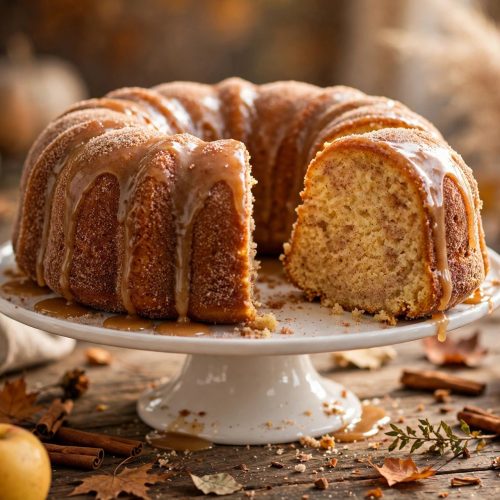
Apple Cider Donut Cake
A soft, cinnamon-spiced bundt cake made with real apple cider reduced down to a syrupy concentrate, studded with grated apple, and finished like a cider donut — rolled in cinnamon sugar and drizzled with a sweet apple cider glaze.
Ingredients
- 2 cups (480 ml) apple cider
- 2 3/4 cups (330 g) all-purpose flour
- 2 teaspoons baking powder
- 1/2 teaspoon baking soda
- 1 1/2 teaspoons ground cinnamon
- 1/2 teaspoon ground nutmeg
- 1/4 teaspoon ground cloves
- 1 teaspoon fine salt
- 3/4 cup (170 g) unsalted butter, softened
- 1 cup (200 g) granulated sugar
- 1/2 cup (110 g) packed light brown sugar
- 3 large eggs room temperature
- 1 tablespoon vanilla extract
- 1/2 cup (120 g) unsweetened applesauce
- 1 cup (120 g) Honeycrisp or Granny Smith apple, peeled and finely grated
- For the cinnamon-sugar coating: 1/4 cup (50 g) granulated sugar + 1 1/2 teaspoons ground cinnamon
- For the cider glaze: 1 cup (120 g) powdered sugar + 2 tablespoons reduced apple cider
Instructions
- Pour the apple cider into a small saucepan and simmer over medium heat until reduced to 3/4 cup, about 15–18 minutes. It will look syrupy and smell intensely apple-y. Set aside to cool completely. Reserve 2 tablespoons for the glaze and 2 tablespoons for brushing; the rest goes into the batter.
- Heat the oven to 350°F (175°C). Grease a 10-cup bundt pan generously with butter, then dust it with flour, tapping out the excess. Get into every groove — this cake needs to release cleanly.
- Whisk the flour, baking powder, baking soda, cinnamon, nutmeg, cloves, and salt in a medium bowl.
- Beat the butter, granulated sugar, and brown sugar in a large bowl on medium-high speed until light and fluffy, about 3 minutes. Beat in the eggs one at a time, then the vanilla.
- Beat in 1/2 cup of the cooled reduced cider and the applesauce on low speed until just combined. The batter may look slightly curdled — that is fine.
- Add the dry ingredients in two additions, mixing on low just until no dry streaks remain. Fold in the grated apple with a spatula. Do not overmix, or the crumb turns tough.
- Scrape the batter into the prepared bundt pan and smooth the top. Bake at 350°F (175°C) for 45–50 minutes, until a skewer inserted into the thickest part comes out with just a few moist crumbs.
- Cool the cake in the pan on a rack for 15 minutes, then invert it onto the rack and let it cool completely, about 1 hour.
- While the cake is still just barely warm, brush it all over with the 2 tablespoons of reduced cider you reserved for brushing, then sprinkle the cinnamon-sugar coating all over the top and sides, pressing gently so it sticks.
- Whisk the powdered sugar with 2 tablespoons of the reduced cider until smooth and drizzle it over the cooled cake. Slice and serve at room temperature.
Notes
Reducing the cider is the whole secret — simmering 2 cups down to 3/4 cup concentrates the apple flavor tenfold. Skipping this step leaves a bland cake.
Use apple cider, not apple juice. Cider is unfiltered and spiced, and it gives the cake its warm orchard flavor; juice is too sweet and too thin.
Grease the bundt pan like you mean it. Butter and flour every groove, or the cinnamon-sugar coating will hide a stuck cake — a baking spray with flour works too.
Grated apple keeps the crumb moist for days. Honeycrisp is sweet, Granny Smith is tart — either works, and a mix of both is even better.
The cake tastes best the day after baking, once the cider flavor deepens. Wrap it tightly and store at room temperature up to 3 days, or freeze it (unglazed) for up to 2 months.