
This pumpkin pie cheesecake is the dessert that ends the Thanksgiving debate once and for all. Why choose between pumpkin pie and cheesecake when one slice gives you both — a buttery graham cracker crust, a silky cream-cheese filling swirled with spiced pumpkin puree, and a finish so smooth it slices like a dream? It tastes like pumpkin pie grew up and got luxurious, and it looks like the centerpiece your holiday table has been waiting for.
If you have ever been nervous about baking a cheesecake, this is the recipe to change that. The method is forgiving by design: a water bath, a slow oven cool, and an overnight chill do the hard work for you, and the result is a crack-free cheesecake that even first-time bakers can be proud of. Best of all, it is a make-ahead dream — bake it up to two days before Thanksgiving, and all you have to do on the day is whip the cream and take the compliments.
Why This Pumpkin Pie Cheesecake Works
Most pumpkin cheesecakes fail in one of two ways: they crack, or they taste more like plain cheesecake with a whisper of pumpkin. This recipe fixes both.
First, the pumpkin is not an afterthought. A full 15-ounce can of pumpkin puree goes into the filling, along with pumpkin pie spice, cinnamon, and nutmeg, so every bite tastes like fall — not like a cheesecake that happens to be orange. The sour cream keeps the crumb silky and adds just enough tang to balance the sweetness.
Second, the baking method is built around crack prevention. The water bath keeps the oven environment humid and gentle, so the cheesecake bakes evenly instead of puffing and collapsing. Turning the oven off and letting the cake cool slowly inside prevents the sudden temperature drop that causes most cracks. And the overnight chill firms everything up for the cleanest possible slices.
Third, it is genuinely make-ahead friendly. Cheesecake tastes better on day two, when the flavors have melded and the texture has set fully. On Thanksgiving day, when your oven is already juggling a turkey and three side dishes, a dessert that is already finished and sitting in the fridge is nothing short of a gift.
Ingredients
Graham Cracker Crust
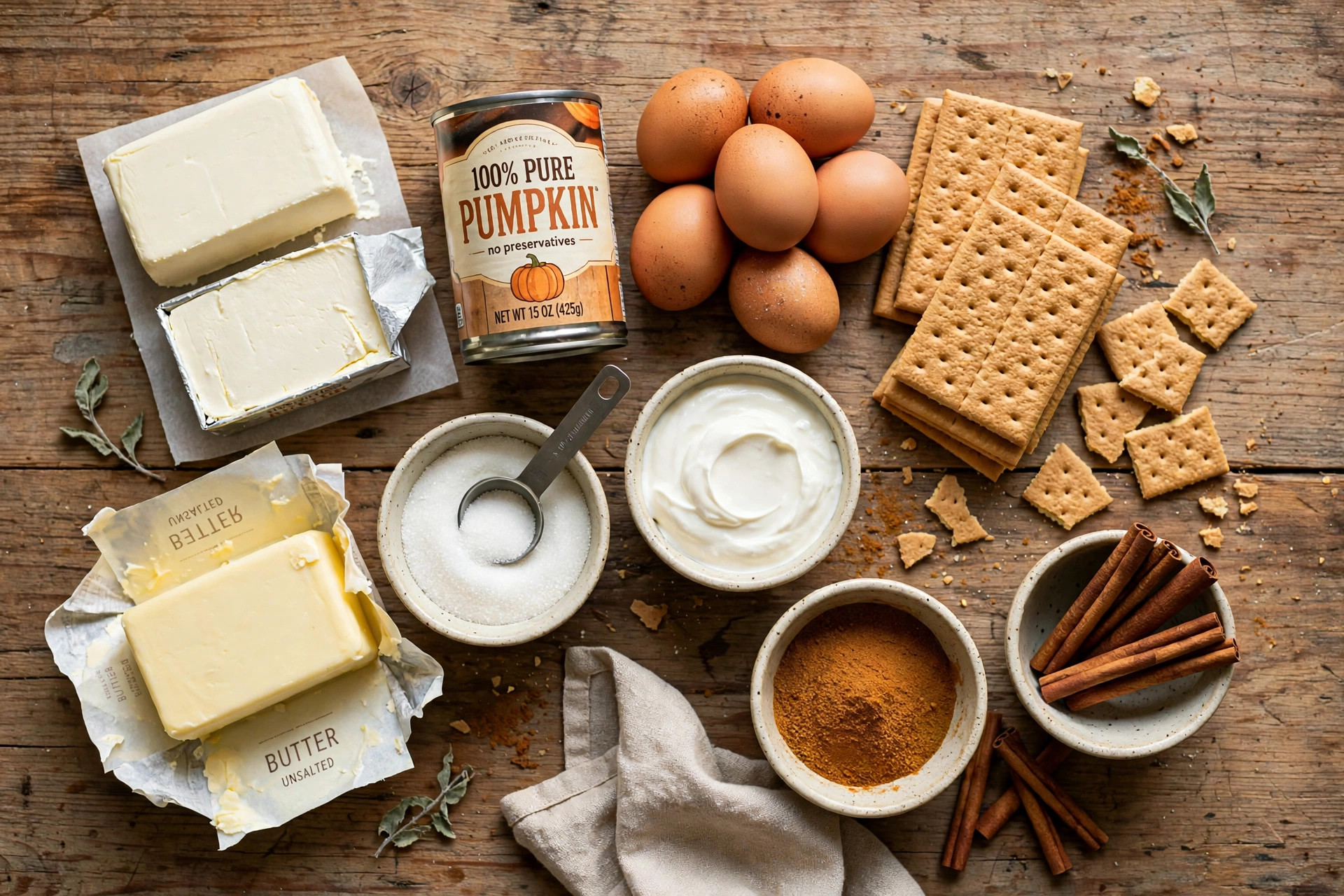
- 1 1/2 cups graham cracker crumbs (about 10 full sheets)
- 1/4 cup granulated sugar
- 6 tablespoons unsalted butter, melted
- 1/4 teaspoon ground cinnamon
Pumpkin Cheesecake Filling
- 24 ounces (3 blocks) full-fat cream cheese, softened to room temperature
- 3/4 cup granulated sugar
- 1/2 cup light brown sugar, packed
- 1 can (15 ounces) pumpkin puree (not pumpkin pie filling)
- 3 large eggs, room temperature
- 1/3 cup sour cream, room temperature
- 1 tablespoon all-purpose flour
- 1 tablespoon vanilla extract
- 2 teaspoons pumpkin pie spice
- 1/2 teaspoon ground cinnamon
- 1/4 teaspoon ground nutmeg
- 1/4 teaspoon salt
Topping (Optional)
- 1 cup heavy whipping cream
- 2 tablespoons powdered sugar
- 1/2 teaspoon vanilla extract
- Ground cinnamon, for dusting
A note on ingredients: use full-fat block cream cheese, never whipped or low-fat tubs, which will not set properly. And use pure pumpkin puree — pumpkin pie filling is already sweetened and spiced, and it will throw the whole balance off. Room-temperature cream cheese, eggs, and sour cream are essential for a lump-free batter.
Step-by-Step Instructions
1. Prep the pan. Heat the oven to 325°F. Wrap the outside of a 9-inch springform pan tightly in two layers of heavy-duty foil — this keeps water bath water out. Lightly grease the inside.
2. Make and bake the crust. Stir the graham crumbs, sugar, melted butter, and cinnamon until the mixture resembles wet sand. Press firmly and evenly into the bottom of the pan and about 1 inch up the sides. Bake for 10 minutes, then let it cool while you make the filling.
3. Beat the cream cheese smooth. In a large bowl, beat the softened cream cheese on medium speed for 2 minutes until completely smooth, scraping the bowl twice. This step is where lumps are defeated — do not rush it.
4. Add the sugars. Beat in the granulated sugar and brown sugar until smooth and creamy, about 1 minute.
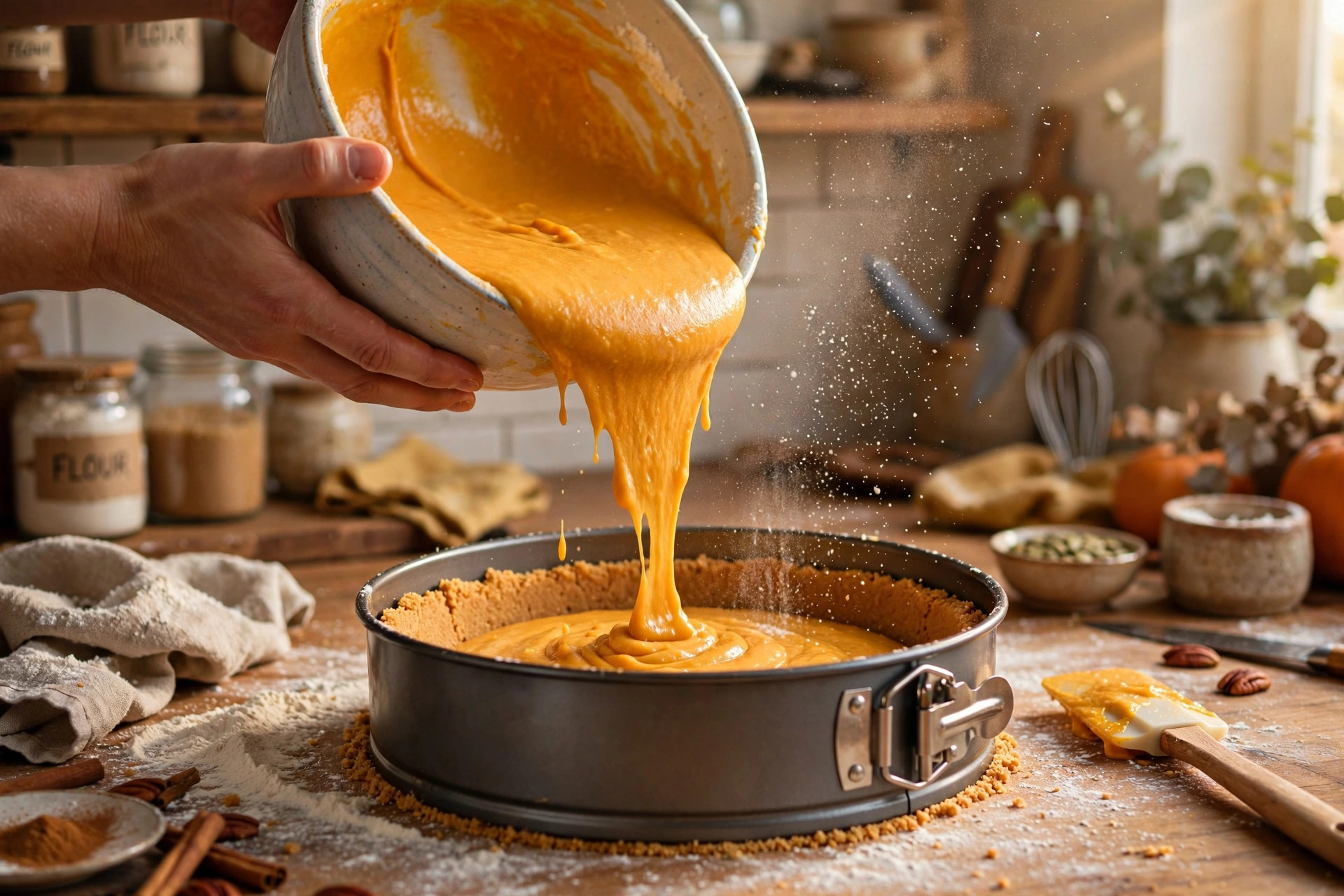
5. Add the pumpkin and flavorings. Beat in the pumpkin puree, sour cream, flour, vanilla, pumpkin pie spice, cinnamon, nutmeg, and salt on low speed just until combined. The batter should be a beautiful, even burnt-orange color.
6. Add the eggs — gently. Add the eggs one at a time, beating on low after each addition just until the yolk disappears. Do not overbeat: excess air causes cracks and sinking.
7. Bake in a water bath. Pour the filling over the cooled crust and smooth the top. Set the foil-wrapped pan in a large roasting pan and pour in boiling water to come halfway up the springform pan. Bake at 325°F for 60 to 70 minutes, until the edges are set and the center still jiggles slightly, like set gelatin.
8. Cool slowly in the oven. Turn the oven off, crack the door open, and let the cheesecake cool in the oven for 1 hour. This slow cool is the single best crack prevention there is.
9. Chill overnight. Remove from the water bath, run a thin knife around the edge, and cool to room temperature. Cover and refrigerate for at least 6 hours, preferably overnight, before releasing the springform ring and slicing.
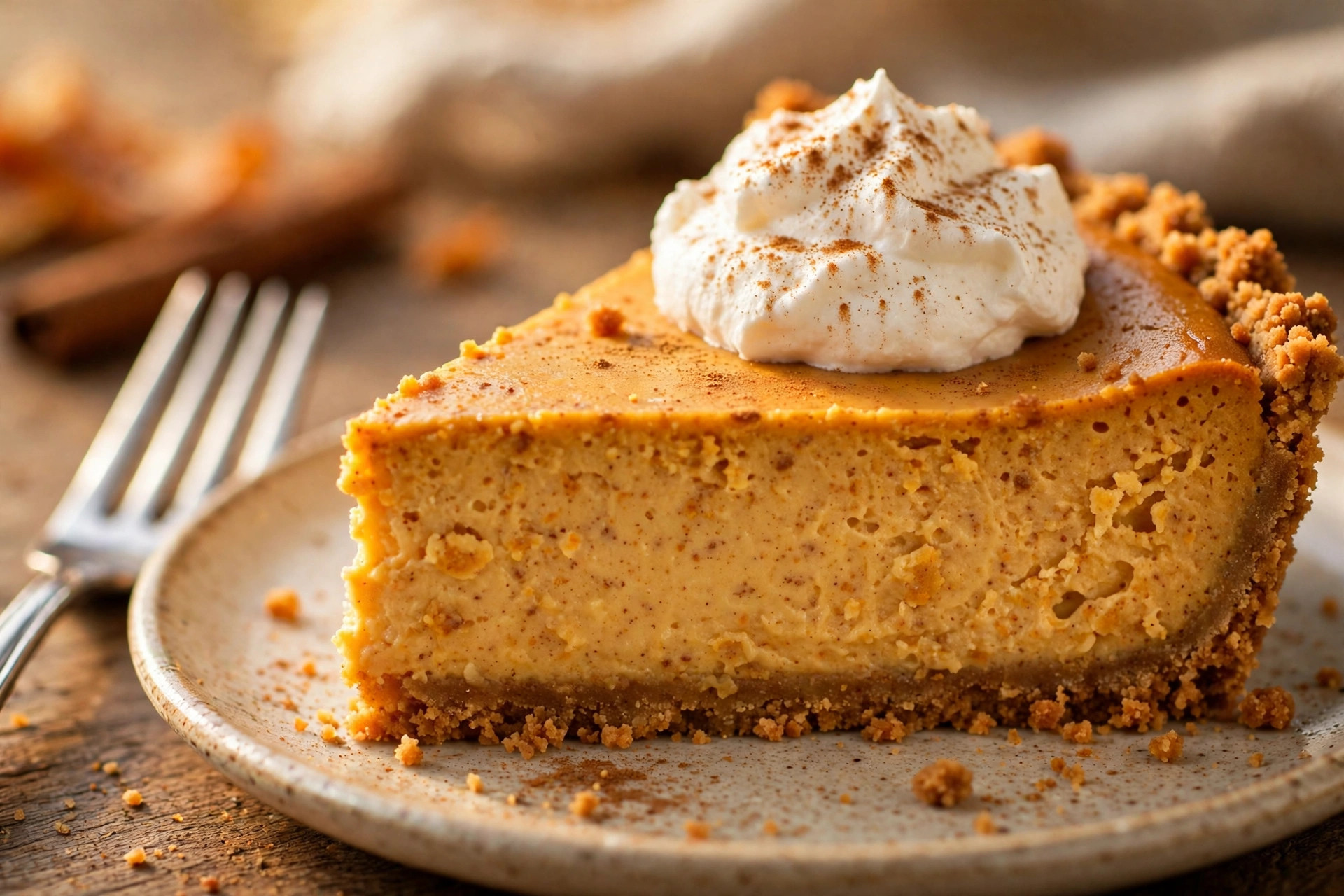
10. Serve. Whip the cream with the powdered sugar and vanilla to soft peaks. Serve each slice with a dollop of whipped cream and a light dusting of cinnamon.
Pro Tips for a Crack-Free Cheesecake
- Room temperature is non-negotiable. Cold cream cheese makes lumps that no amount of beating will fix. Set everything out at least an hour ahead.
- Mix low after the eggs. High speed whips in air, and air is what cracks and sinks a cheesecake. Low and slow from the eggs onward.
- Do not overbake. The center should still jiggle when you turn the oven off — it finishes setting as it cools. A fully firm center in the oven means an overbaked, dry cheesecake.
- Slice with a hot knife. Run a long knife under hot water, wipe dry, cut one slice, and repeat. Clean, bakery-perfect slices every time.
- A crack is not a failure. If one appears, the whipped cream topping covers it completely, and nobody will ever know.
Variations
- Gingersnap crust: Swap the graham crumbs for crushed gingersnaps and skip the cinnamon — the spicy snap is gorgeous with pumpkin.
- Pecan praline topping: Skip the whipped cream and spoon warm salted caramel over each slice with a handful of toasted pecans.
- Chocolate drizzle: A thin drizzle of melted dark chocolate over the chilled cheesecake adds a striking contrast and a richer finish.
- Mini cheesecakes: Divide the crust and filling among a lined muffin tin and bake 18 to 22 minutes for individual servings — perfect for a dessert table.
- No water bath version: If you skip the water bath, place a pan of boiling water on the rack below instead. The cheesecake will still bake gently, though the top may crack slightly — cover it with whipped cream.
Storage
- Fridge: Cover the uncut cheesecake (or individual slices in an airtight container) and refrigerate for up to 5 days. It tastes best on days 1 to 3.
- Freezer: Freeze the whole cheesecake, without topping, wrapped tightly in plastic wrap and foil, for up to 1 month. Thaw overnight in the refrigerator.
- Make ahead: Bake up to 2 days before serving and keep refrigerated, uncut and covered. Add the whipped cream just before serving.
Frequently Asked Questions
Can I use pumpkin pie filling instead of pumpkin puree?
No — pumpkin pie filling is already sweetened and spiced, and it will make the cheesecake too sweet and throw off the spice balance. Use 100% pure pumpkin puree.
Why did my cheesecake crack?
The usual culprits are overbeating after the eggs, overbaking, or cooling too fast. Use low speed, pull it while the center still jiggles, and let it cool slowly in the turned-off oven. And remember: whipped cream hides everything.
Do I really need a water bath?
It is strongly recommended — it is the most reliable way to get an evenly baked, crack-free cheesecake. A pan of water on the rack below is an acceptable fallback, but the full bath gives the best result.
Can I make this ahead for Thanksgiving?
Absolutely — it is better made ahead. Bake up to 2 days in advance, refrigerate uncut, and whip the cream on serving day.
How do I know when it is done?
The edges should be set and the center should jiggle slightly, like set gelatin, when you gently shake the pan. It will firm up completely as it cools and chills.
Pumpkin Pie Cheesecake
Ingredients
Graham cracker crust:
- 1 1/2 cups graham cracker crumbs about 10 full sheets
- 1/4 cup granulated sugar
- 6 tablespoons unsalted butter melted
- 1/4 teaspoon ground cinnamon
Pumpkin cheesecake filling:
- 24 ounces full-fat cream cheese 3 blocks, softened to room temperature
- 3/4 cup granulated sugar
- 1/2 cup light brown sugar packed
- 1 can pumpkin puree 15 ounces (not pumpkin pie filling)
- 3 large eggs room temperature
- 1/3 cup sour cream room temperature
- 1 tablespoon all-purpose flour
- 1 tablespoon vanilla extract
- 2 teaspoons pumpkin pie spice
- 1/2 teaspoon ground cinnamon
- 1/4 teaspoon ground nutmeg
- 1/4 teaspoon salt
Topping (optional):
- 1 cup heavy whipping cream
- 2 tablespoons powdered sugar
- 1/2 teaspoon vanilla extract
- Ground cinnamon for dusting
Instructions
- Heat the oven to 325°F. Wrap the outside of a 9-inch springform pan tightly in two layers of heavy-duty foil. Lightly grease the inside.
- Make the crust: stir the graham crumbs, sugar, melted butter, and cinnamon until the mixture resembles wet sand. Press firmly and evenly into the bottom of the pan and about 1 inch up the sides. Bake for 10 minutes, then cool while you make the filling.
- Beat the cream cheese: in a large bowl, beat the softened cream cheese on medium speed for 2 minutes until completely smooth, scraping the bowl twice. No lumps should remain.
- Add the sugars: beat in the granulated sugar and brown sugar until smooth and creamy, about 1 minute.
- Add the pumpkin and flavorings: beat in the pumpkin puree, sour cream, flour, vanilla, pumpkin pie spice, cinnamon, nutmeg, and salt on low speed just until combined.
- Add the eggs: add the eggs one at a time, beating on low after each addition just until the yolk disappears. Do not overbeat — excess air causes cracks and sinking.
- Bake: pour the filling over the cooled crust and smooth the top. Set the foil-wrapped pan in a large roasting pan and pour in boiling water to come halfway up the springform pan. Bake at 325°F for 60 to 70 minutes, until the edges are set and the center still jiggles slightly like set gelatin.
- Cool slowly: turn the oven off, crack the door open, and let the cheesecake cool in the oven for 1 hour. This slow cool is the best crack prevention there is.
- Chill overnight: remove from the water bath, run a thin knife around the edge, and cool to room temperature. Cover and refrigerate for at least 6 hours, preferably overnight, before releasing the springform ring and slicing.
- Serve: whip the cream with the powdered sugar and vanilla to soft peaks. Serve each slice with a dollop of whipped cream and a light dusting of cinnamon.
Notes
Room-temperature ingredients are non-negotiable: cold cream cheese makes lumps that no amount of beating will fix.
Do not overbeat after the eggs go in. Air bubbles rise, crack, and sink — mix on low and stop as soon as each egg disappears.
The water bath plus the slow oven cool is the crack-free combination. If a small crack appears anyway, the whipped cream topping covers it beautifully.
The cheesecake must chill at least 6 hours, overnight is better — warm cheesecake will not slice cleanly. Use a hot, dry knife, wiping between slices.
Make ahead: bake up to 2 days ahead and keep refrigerated, uncut, covered. Freeze whole (without topping) up to 1 month; thaw overnight in the fridge.