
There is a moment every December when the house starts to smell like gingerbread — warm molasses, cinnamon, ginger — and suddenly it feels like Christmas. This gingerbread cheesecake captures exactly that moment in a cake: a buttery gingersnap crust, a creamy filling spiced with ginger, cinnamon, nutmeg, and cloves, and a cloud of whipped cream crowned with sparkling sugared cranberries.
It is the dessert that looks like it came from a bakery and tastes like the holidays, but it asks almost nothing of you on the day you serve it. The cake is baked a day ahead, it actually tastes better on day two, and the only thing you do before serving is whip the cream and scatter the cranberries on top. No water-bath anxiety, no decorating skills — just one pan, one bowl, and a slow oven.
If you have ever been let down by a cheesecake that cracked, puffed, or came out grainy, this recipe was built to fix all three. The water bath, the low oven, and the slow cool are not fussy extras — they are the three quiet steps that give you a smooth top and a dense, creamy center every single time.
Why This Recipe Works
The gingersnap crust does double duty. Crushed gingersnaps with melted butter bake into a crisp, spicy base that tastes like the cookie itself — and it holds up under a wet filling without turning soggy. Pressing it up the sides gives every slice a crunchy edge.
Molasses is the flavor, not just the sweetness. A quarter cup of unsulphured molasses gives the filling its warm caramel depth and its gingerbread soul. Brown sugar alone would make it sweet; molasses makes it taste like gingerbread.
The water bath is the insurance policy. Gentle, humid heat cooks the filling evenly from edge to center, so the cake sets creamy instead of puffy, and the top stays smooth instead of cracking. Foil-wrapping the pan keeps the water out and the texture in.
It is genuinely better the next day. Overnight in the fridge, the spices bloom, the molasses deepens, and the cake firms up into clean, bakery-style slices. This is the rare Christmas dessert that rewards you for making it early.
Ingredients
Gingersnap crust
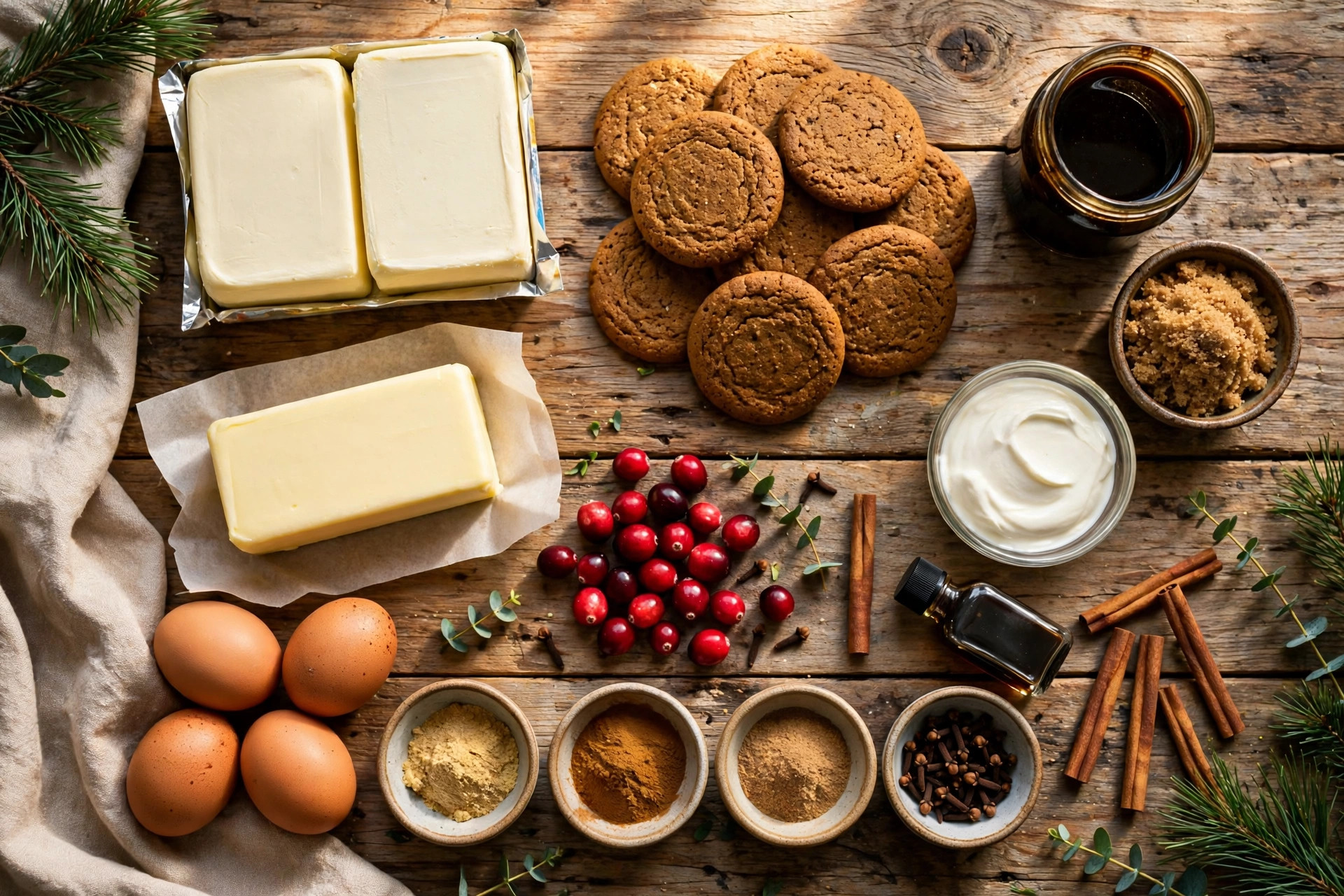
- 2 cups (280 g) gingersnap cookie crumbs (about 40 cookies)
- 5 tablespoons (70 g) unsalted butter, melted
- 2 tablespoons light brown sugar, packed
- 1/4 teaspoon ground cinnamon
Cheesecake filling
- 24 ounces (680 g) full-fat cream cheese, at room temperature
- 1 cup (200 g) light brown sugar, packed
- 3 large eggs, at room temperature
- 1/2 cup (120 g) full-fat sour cream
- 1/4 cup (80 g) unsulphured molasses
- 2 teaspoons ground ginger
- 1 1/2 teaspoons ground cinnamon
- 1/4 teaspoon ground nutmeg
- 1/4 teaspoon ground cloves
- 1 teaspoon vanilla extract
- 1/4 teaspoon fine salt
Topping
- 1 1/2 cups heavy whipping cream
- 3 tablespoons powdered sugar
- 1 teaspoon vanilla extract
- Sugared cranberries, for decorating
- Mini gingerbread cookies, for decorating (optional)
How to Make Gingerbread Cheesecake
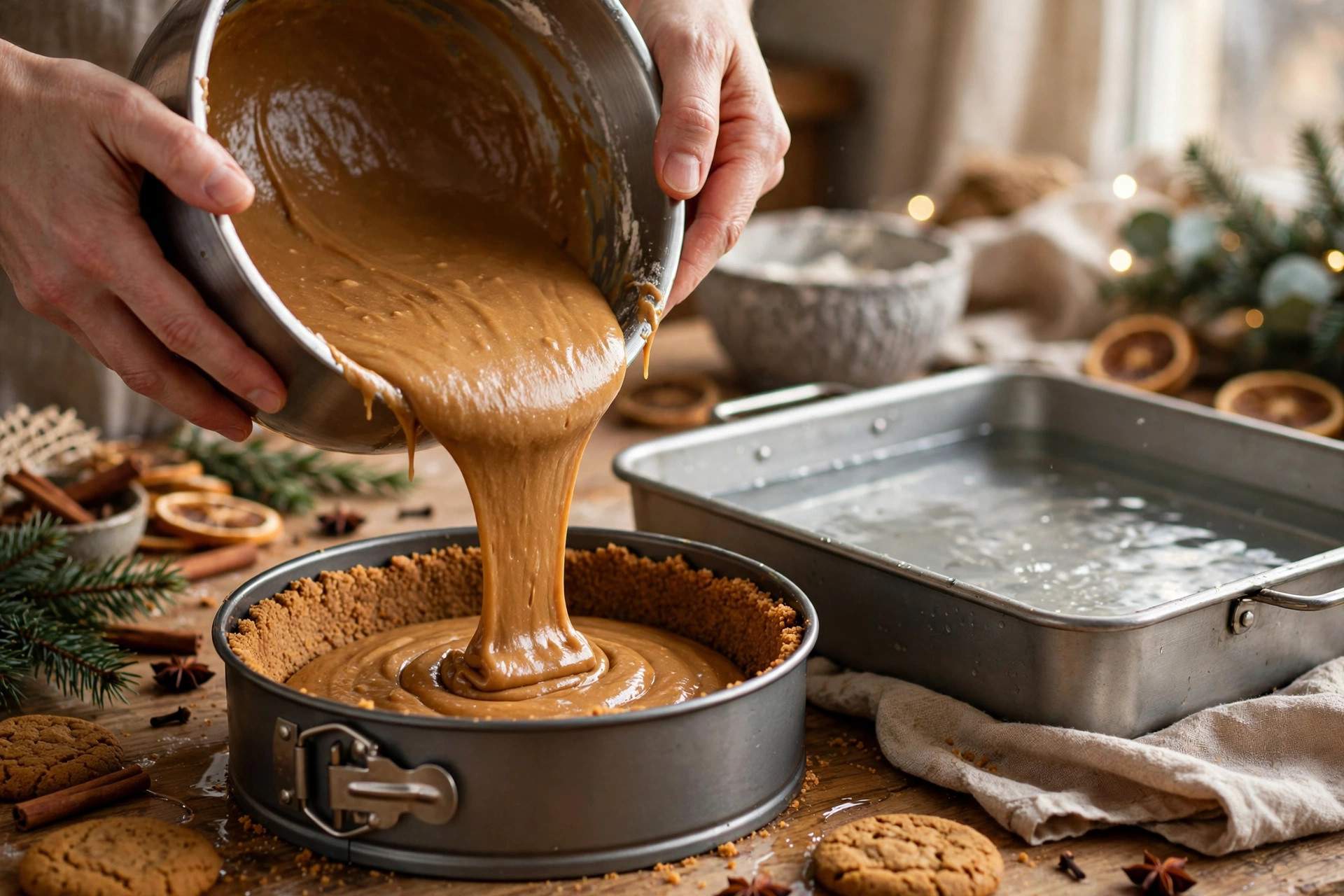
1. Make the crust. Heat the oven to 325°F (165°C). Stir the gingersnap crumbs, melted butter, brown sugar, and cinnamon together until the crumbs look like wet sand. Press firmly into the bottom and about 1 inch up the sides of a 9-inch springform pan, using the bottom of a measuring cup to pack it tight. Bake for 10 minutes, then set aside to cool slightly. Reduce the oven to 300°F (150°C).
2. Beat the cream cheese. In a large bowl, beat the cream cheese and brown sugar on medium speed for 2 to 3 minutes until completely smooth and fluffy, scraping the bowl twice. No lumps should remain — this is the step that decides the texture.
3. Add the wet ingredients. Beat in the sour cream, molasses, vanilla, and salt until just combined. Then add the ginger, cinnamon, nutmeg, and cloves and mix on low until evenly distributed. The batter will be a warm caramel-brown color.
4. Add the eggs. Add the eggs one at a time, beating on low speed just until each one disappears. Do not overbeat — too much air is what cracks a cheesecake.
5. Bake in a water bath. Wrap the outside of the springform pan tightly in two layers of heavy-duty foil. Set it in a large roasting pan and pour in boiling water until it reaches halfway up the sides. Bake at 300°F (150°C) for 55 to 65 minutes, until the edges are set and the center still jiggles like gelatin when you nudge the pan.
6. Cool slowly. Turn the oven off, crack the door open, and leave the cheesecake inside for 1 hour. This slow cool is what keeps the top smooth and crack-free. Remove from the water bath, run a thin knife around the edge, and refrigerate for at least 4 hours, preferably overnight.
7. Whip the topping. Just before serving, whip the heavy cream with the powdered sugar and vanilla to soft peaks. Spread or pipe it over the chilled cheesecake.
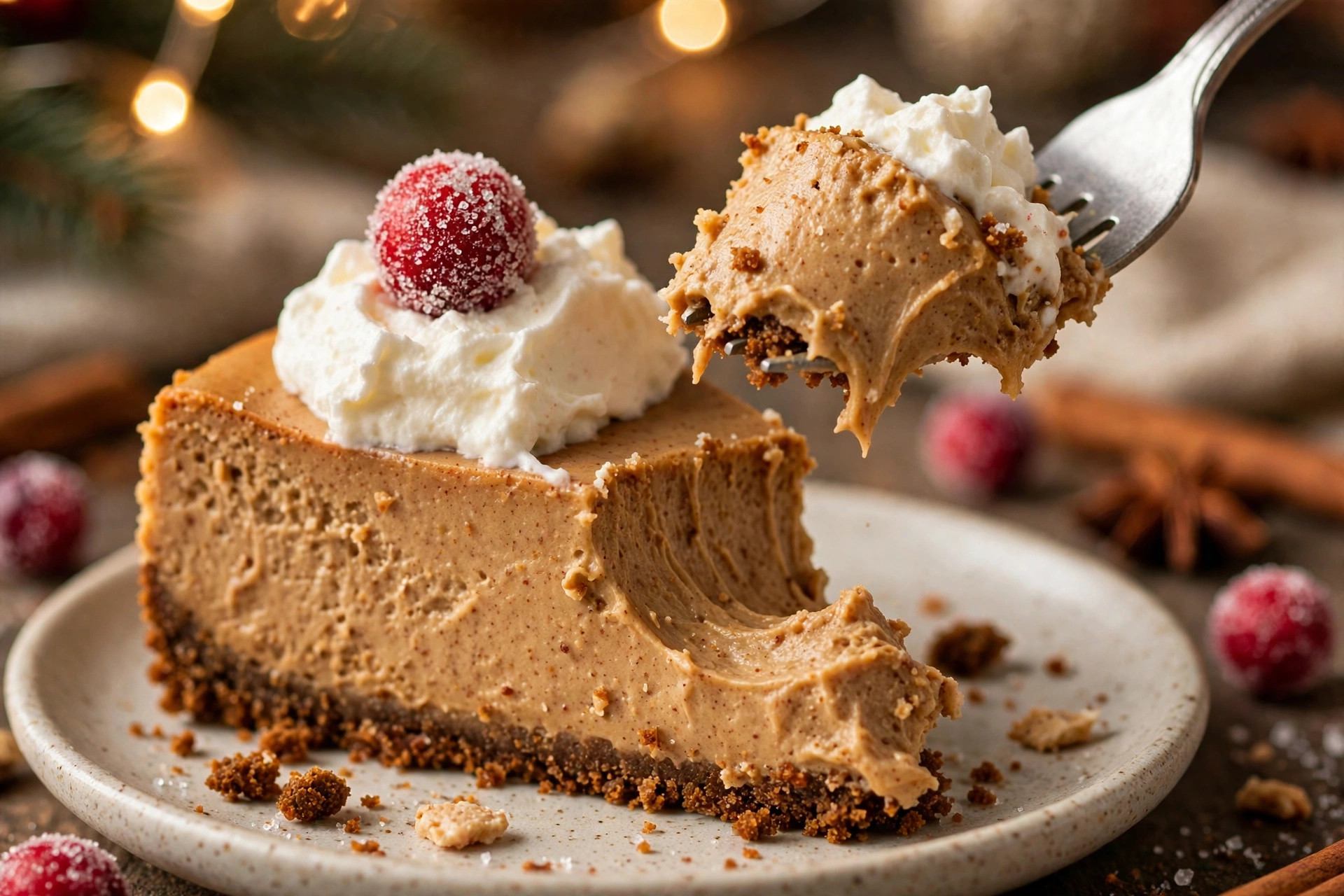
8. Decorate and serve. Crown the cake with sugared cranberries and a few mini gingerbread cookies. Slice with a hot, dry knife, wiping the blade between cuts, for clean bakery-style slices.
Tips for the Best Gingerbread Cheesecake
- Room temperature is not optional. Cold cream cheese leaves lumps that never bake out. Set the cream cheese, eggs, and sour cream out an hour before you start.
- Do not overbeat after the eggs go in. Every extra minute of beating whips in air, and air is what makes a cheesecake puff up in the oven and crack as it cools. Low speed, just until combined.
- The jiggle test is the doneness test. When the timer goes off, the center should still wobble like gelatin. It finishes setting in the fridge; a cheesecake baked until firm is overbaked.
- Wrap the pan well. Two layers of heavy-duty foil, folded up high around the springform, keep water out of the crust. A soggy crust is the one failure a water bath can cause — and it is entirely preventable.
- Chill overnight for the best flavor. The molasses and spice bloom in the fridge, and the slices cut cleanly. Day two is genuinely the better cake.
Variations
- No-bake version: skip the eggs and water bath — beat the filling with an extra 1/2 cup of whipped cream folded in, pour it over the baked crust, and chill overnight. Lighter, mousse-like, and the oven stays free.
- Chocolate gingerbread: add 1/4 cup cocoa powder to the filling and swap the whipped cream topping for chocolate ganache. The ginger and chocolate together taste like a holiday truffle.
- Cranberry swirl: drop spoonfuls of cranberry sauce over the filling before baking and drag a toothpick through them for a jewel-red swirl — the tart cranberry cuts the richness beautifully.
- Mini cheesecakes: bake the same batter in a lined muffin tin for 18 to 20 minutes. Individual portions, no springform, and perfect for a dessert table.
- Gingerbread latte twist: add 1 tablespoon of instant espresso powder to the filling for a subtle coffee warmth that makes the spices taste even deeper.
Storage & Make-Ahead
- Fridge: the finished cake keeps beautifully for up to 5 days in the fridge, covered. Add the whipped cream topping the day you serve it so it stays fluffy.
- Freezer: freeze the un-topped cake whole for up to 1 month — wrap tightly in plastic wrap, then foil. Thaw overnight in the fridge, then whip the cream and decorate.
- Make-ahead plan: bake up to 2 days before Christmas, keep it chilled in the pan, and decorate the morning you serve it. The cake is one less thing on the busiest cooking day of the year.
Frequently Asked Questions
Can I make gingerbread cheesecake without a water bath?
You can, but the texture will not be the same. A water bath gives gentle, even heat — without it, the edges overbake while the center is still raw, and the top is far more likely to crack. If you truly cannot do a water bath, bake at 300°F and place a pan of boiling water on the rack below; it helps, though not as much as the real thing.
Why did my cheesecake crack?
Almost always one of three things: the oven was too hot, the batter was overbeaten after the eggs went in, or the cake cooled too fast. The fixes are the recipe itself — 300°F, low speed after the eggs, and the slow 1-hour cool in the turned-off oven.
Can I use low-fat cream cheese?
Not for this cake. Low-fat cream cheese has more water and stabilizers, so the filling sets soft and can weep in the fridge. Full-fat block cream cheese is the whole structure of the cake.
What is the difference between molasses and blackstrap molasses?
Unsulphured molasses is sweet and warm with a mild caramel flavor — that is what this recipe uses. Blackstrap molasses is much darker, more bitter, and far less sweet, and it would overpower the spices. Do not substitute it here.
Can I freeze gingerbread cheesecake?
Yes — freeze it before adding the whipped cream topping, wrapped tightly in plastic wrap and foil, for up to 1 month. Thaw overnight in the fridge and decorate the day you serve it. The texture after thawing is nearly identical to fresh.
Gingerbread Cheesecake
Ingredients
Gingersnap crust
- 2 cups 280 g gingersnap cookie crumbs (about 40 cookies)
- 5 tablespoons 70 g unsalted butter, melted
- 2 tablespoons light brown sugar packed
- 1/4 teaspoon ground cinnamon
Cheesecake filling
- 24 ounces 680 g full-fat cream cheese, at room temperature
- 1 cup 200 g light brown sugar, packed
- 3 large eggs at room temperature
- 1/2 cup 120 g full-fat sour cream
- 1/4 cup 80 g unsulphured molasses
- 2 teaspoons ground ginger
- 1 1/2 teaspoons ground cinnamon
- 1/4 teaspoon ground nutmeg
- 1/4 teaspoon ground cloves
- 1 teaspoon vanilla extract
- 1/4 teaspoon fine salt
Topping
- 1 1/2 cups heavy whipping cream
- 3 tablespoons powdered sugar
- 1 teaspoon vanilla extract
- Sugared cranberries for decorating
- Mini gingerbread cookies for decorating (optional)
Instructions
- Make the crust: heat the oven to 325°F (165°C). Stir the gingersnap crumbs, melted butter, brown sugar, and cinnamon together until the crumbs look like wet sand. Press firmly into the bottom and about 1 inch up the sides of a 9-inch springform pan, using the bottom of a measuring cup to pack it tight. Bake for 10 minutes, then set aside to cool slightly. Reduce the oven to 300°F (150°C).
- Beat the cream cheese: in a large bowl, beat the cream cheese and brown sugar on medium speed for 2 to 3 minutes until completely smooth and fluffy, scraping the bowl twice. No lumps should remain — this is the step that decides the texture.
- Add the wet ingredients: beat in the sour cream, molasses, vanilla, and salt until just combined. Then add the ginger, cinnamon, nutmeg, and cloves and mix on low until evenly distributed. The batter will be a warm caramel-brown color.
- Add the eggs: add the eggs one at a time, beating on low speed just until each one disappears. Do not overbeat — too much air is what cracks a cheesecake.
- Bake in a water bath: wrap the outside of the springform pan tightly in two layers of heavy-duty foil. Set it in a large roasting pan and pour in boiling water until it reaches halfway up the sides. Bake at 300°F (150°C) for 55 to 65 minutes, until the edges are set and the center still jiggles like gelatin when you nudge the pan.
- Cool slowly: turn the oven off, crack the door open, and leave the cheesecake inside for 1 hour. This slow cool is what keeps the top smooth and crack-free. Remove from the water bath, run a thin knife around the edge, and refrigerate for at least 4 hours, preferably overnight.
- Whip the topping: just before serving, whip the heavy cream with the powdered sugar and vanilla to soft peaks. Spread or pipe it over the chilled cheesecake.
- Decorate and serve: crown the cake with sugared cranberries and a few mini gingerbread cookies. Slice with a hot, dry knife, wiping the blade between cuts, for clean bakery-style slices.
Notes
- Room-temperature cream cheese, eggs, and sour cream are the whole game. Cold ingredients leave lumps that no amount of beating fixes — set everything out an hour before you start.
- Do not skip the water bath. Gentle, humid heat is what gives you a creamy, dense center and a smooth, crack-free top. A dry oven makes a puffy, cracked cake.
- The center should still jiggle when the timer goes off. It finishes setting in the fridge; a cheesecake baked until firm is a cheesecake baked too long.
- Chill overnight if you can. The flavor deepens, the molasses and spice bloom, and the slices cut cleanly. This is genuinely a better cake on day two.
- Freeze the un-topped cake whole for up to 1 month: wrap tightly in plastic wrap, then foil. Thaw overnight in the fridge, then whip the cream and decorate the day you serve it.
- Make sugared cranberries by simmering fresh cranberries in simple syrup for 1 minute, draining, and rolling them in granulated sugar — they dry into sparkling, jewel-like garnishes in about an hour.